



Every time you hit "Buy Now," a massive, highly coordinated logistics network kicks into gear. Moving millions of packages across a country as vast as India requires a supply chain that is not just expansive, but constantly evolving to become stronger and more resilient.
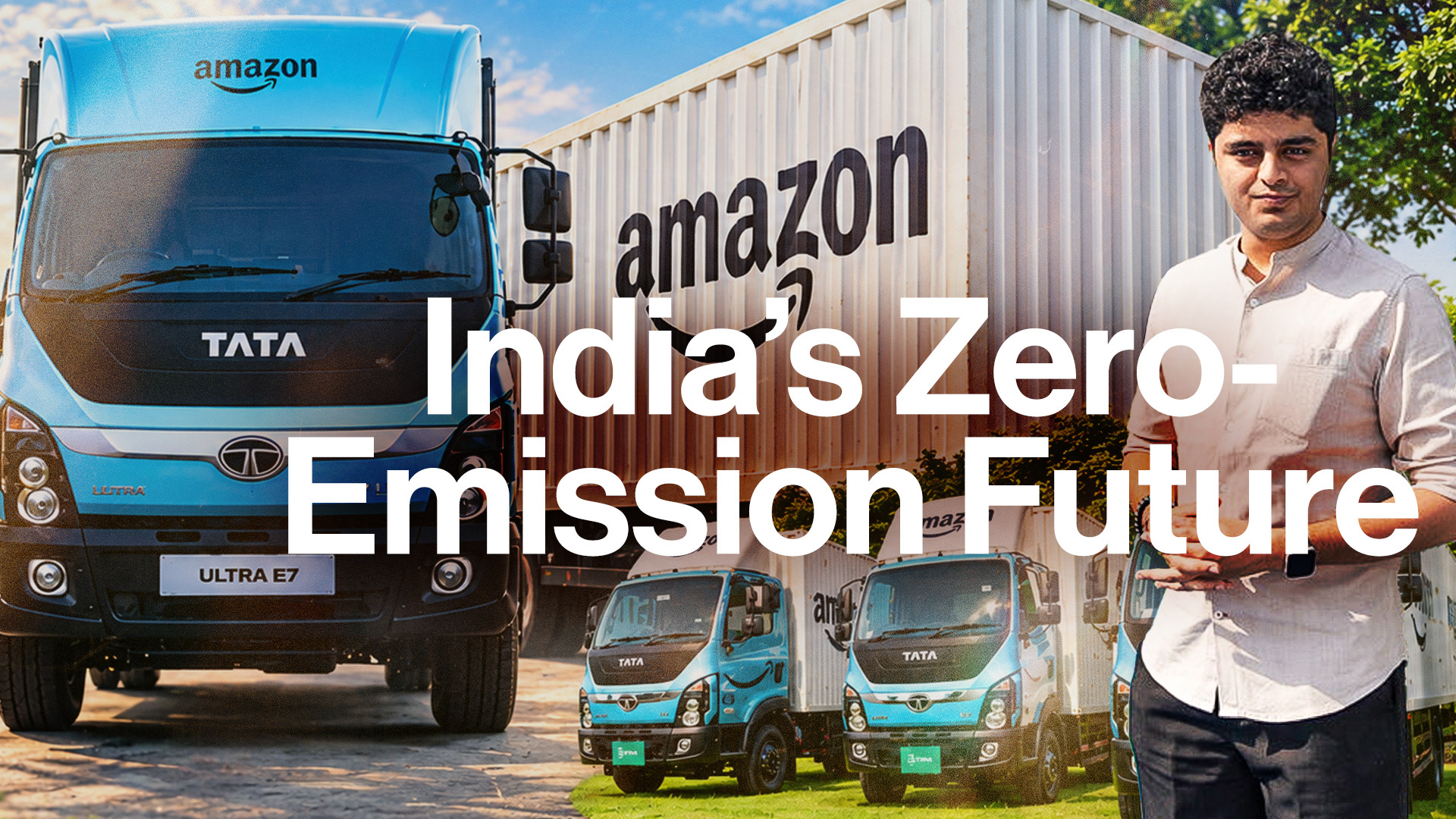
Recently, the curtain dropped in Delhi to reveal the next major evolution in that network. Through a landmark collaboration, Amazon and Tata Motors flagged off the first batch of Tata Ultra E.7 electric trucks, which will be deployed into Amazon’s transportation network.
With this flag off, Amazon officially became the first e-commerce company in India to operationalize N2 (commercial trucks in the 3.5 to 12-tonne gross vehicle weight bracket) electric trucks under the Delhi EV Policy 2026.
This isn't just about updating vehicles; it is about scaling the very backbone of Indian e-commerce. Here are some milestones marked by this flag off:
1. A Historic Fleet Expansion
To support the massive volume of goods moving across the country, Amazon and Tata Motors plan to deploy 3,000+ electric trucks across India. This unprecedented rollout ensures that the middle-mile operation, the critical step that moves packages between massive fulfillment centers and local delivery hubs, is powered by state-of-the-art cleaner, commercial technology.
2. Taking Operations Beyond City Limits
Beyond intracity routes, these trucks will progressively take on long-haul interstate transit. This means expanding operational capabilities onto national arteries, including the massive 2,800-km Delhi–Bengaluru–Chennai freight corridor, ensuring seamless cargo flow across states.
3. Expanding an Already Massive Network
This new fleet of heavy trucks doesn't stand alone; it integrates into an already thriving delivery ecosystem. Amazon has already successfully deployed more than 15,000 electric delivery vehicles across 500 cities in India. By adding 7-tonne Tata electric trucks to the mix, Amazon is building on its inlocal deliveries network while taking steps towards electrifying long-haul freight transportation.
4. A Natural Step Toward a Sustainable Future
Modernizing a supply chain isn't just about capacity; it’s about future-proofing operations. By advancing the electrification of long-haul freight transportation, a sector responsible for moving nearly 70% of India’s goods, Amazon is supporting the transition to lower-emission transportation as part of its broader effort to achieve net-zero carbon emissions by 2040.
Behind every package that arrives at your doorstep is a network that is getting smarter, more capable, and more sustainable. With this historic deployment, Amazon and Tata Motors aren't just moving boxes, they are defining the future of commercial logistics in India.
In collaboration with Amazon × Tata Motors
