Rakshabandhan is often seen as a celebration of the bond between brothers and sisters, but the festival can also carry a message that goes beyond religion. A rakhi does not ask where someone comes from or what faith they follow. It simply marks a promise of care, protection and family. For Mumbai's Anamta Ahmad, that promise took an unexpected form. She did not grow up with a brother. Then, after a life-changing accident and an arm transplant, she found one in a family she had never known before.
One moment changed everything
In 2022, Anamta was 13 and visiting her aunt in Aligarh, Uttar Pradesh.
She remembered standing on a railing when, suddenly, everything went dark.
"I blanked completely. I did not know what was happening with me," she recalled.
When she woke up in a local hospital, the scene around her felt unreal. Her parents were crying. People were screaming. Something was burning.
Then she looked down.
Her hands were badly burnt.
Doctors told her that her right arm could not be saved and would have to be amputated. For a 13-year-old, the change was devastating.
"But then I saw that there were people in worse condition than me there," Anamta said.
She began telling herself that she still had her left arm and both her legs.
"This is not the time to give up," she decided.
She chose to face the world
After her discharge, doctors advised her parents to be cautious about taking her into public spaces because she was young and would have to adjust to her changed appearance.
Anamta had another idea.
She asked her parents to take her to a crowded restaurant.
People stared.
She did not look away.
"I didn't care because I had accepted how I was," she recalled.
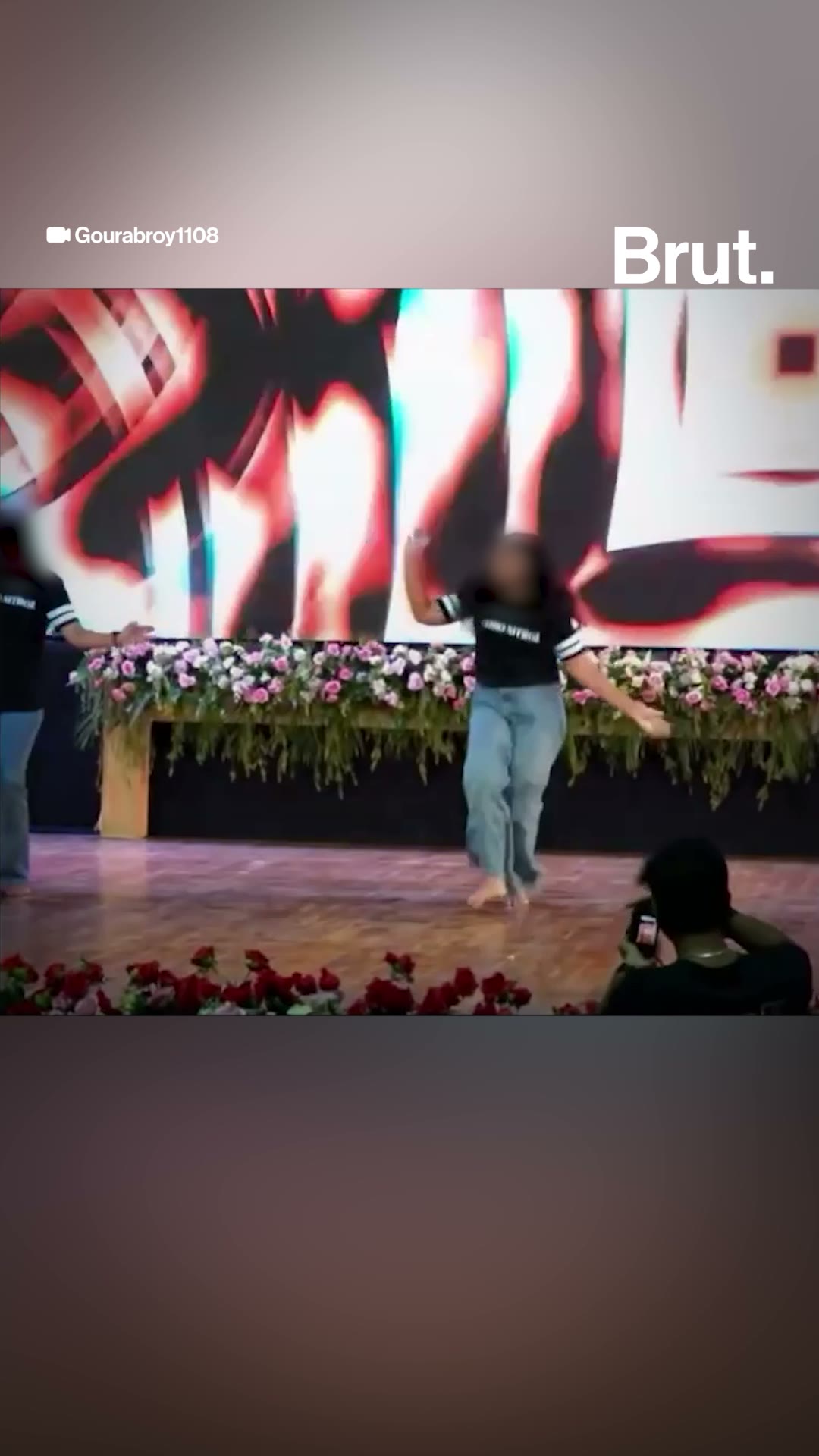
Before the accident, Anamta had loved swimming, skating and dancing. Losing her arm did not make her give them up. She continued swimming, dancing and skating, adapting to life with one arm.
Writing, however, became a different challenge.
Her left hand had also been badly burnt and was reportedly only around 20% functional. She underwent physiotherapy, exercised extensively and tried acupuncture to improve its movement.
Doctors had suggested that she consider taking a break from her studies. Anamta refused.
"I don't want any sympathy at all," she said.
She prepared for her board examinations while still recovering and eventually scored 92% in her ICSE boards, including 98% in one subject.
Then came an unexpected second chance
Nearly two years after losing her arm, Anamta learnt that she could receive an arm transplant.
The donor was a nine-year-old girl named Riya.
For Anamta, the decision made by Riya's family was difficult to put into words.
"A nine-year-old girl's parents are donating organs... that is a salute to them," she said.
She believed Riya had not only given her another chance at life, but had potentially helped other people through organ donation as well.
But the transplant would give Anamta something she had not expected.
A brother.
The rakhi that changed two families
The year after her transplant, Anamta travelled to meet Riya's family for Rakshabandhan.
She went there to tie a rakhi to Riya's brother, Shivam Mistry.
It was their first Rakshabandhan together.
And the moment Anamta entered the house, something felt strangely familiar.
"I have not come here for the first time," she remembered feeling.
The family welcomed her, hugged her and treated her like their own. They insisted she eat more, the way parents often do with their children.
For Anamta, the connection was overwhelming.
She had arrived to meet the family of the girl whose arm she had received. She left with a new family of her own.
For Shivam, Riya felt close again
For Shivam, the meeting carried another kind of emotion.
Riya had been his younger sister. After losing her, seeing Anamta using the arm that had belonged to Riya was deeply personal.
"I was feeling that I have met my sister again," Shivam said.
He recalled feeling that Riya's hand was now in his own hand.
He also noticed similarities between the two girls. Both, he said, were interested in swimming and drawing.
The family had made the decision to donate Riya's organs during an unimaginably difficult period. According to their account, Riya's maternal aunt had learnt about organ donation through the Radha Soami group and raised the possibility with the family. Her parents agreed.
A sister, a brother and two families
Shivam still remembers the ordinary things about Riya.
They played together. They teased each other. Whenever there was something to eat, she wanted the bigger portion.
When the family went shopping, she would point out the things she wanted.
Those little memories are now the ones he misses most.
But Anamta's presence gave him a new connection to those memories.
"She got a brother. I also got my sister back," Shivam said.
The two families, once complete strangers, grew closer through an experience neither had imagined.
When a rakhi crosses every boundary
Their story has also opened a conversation about communal harmony.
Anamta sees their relationship as a reminder that people can find family beyond the boundaries they are born into.
"It’s not about getting divided into something," she said.
For her, the relationship between the two families showed that an act of kindness can create a bond where none existed before. She also hoped their experience could encourage more people to consider organ donation.
A Muslim girl and a Hindu family were brought together by an experience born from unimaginable loss.
And on Rakshabandhan, a simple thread became something much bigger.
It became a symbol of a sister who was lost, a girl who received a second chance, and a brother who found a new way to feel close to the sister he had lost.
Sometimes, family is not only the one we are born into.
Sometimes, it is the one life unexpectedly gives us.