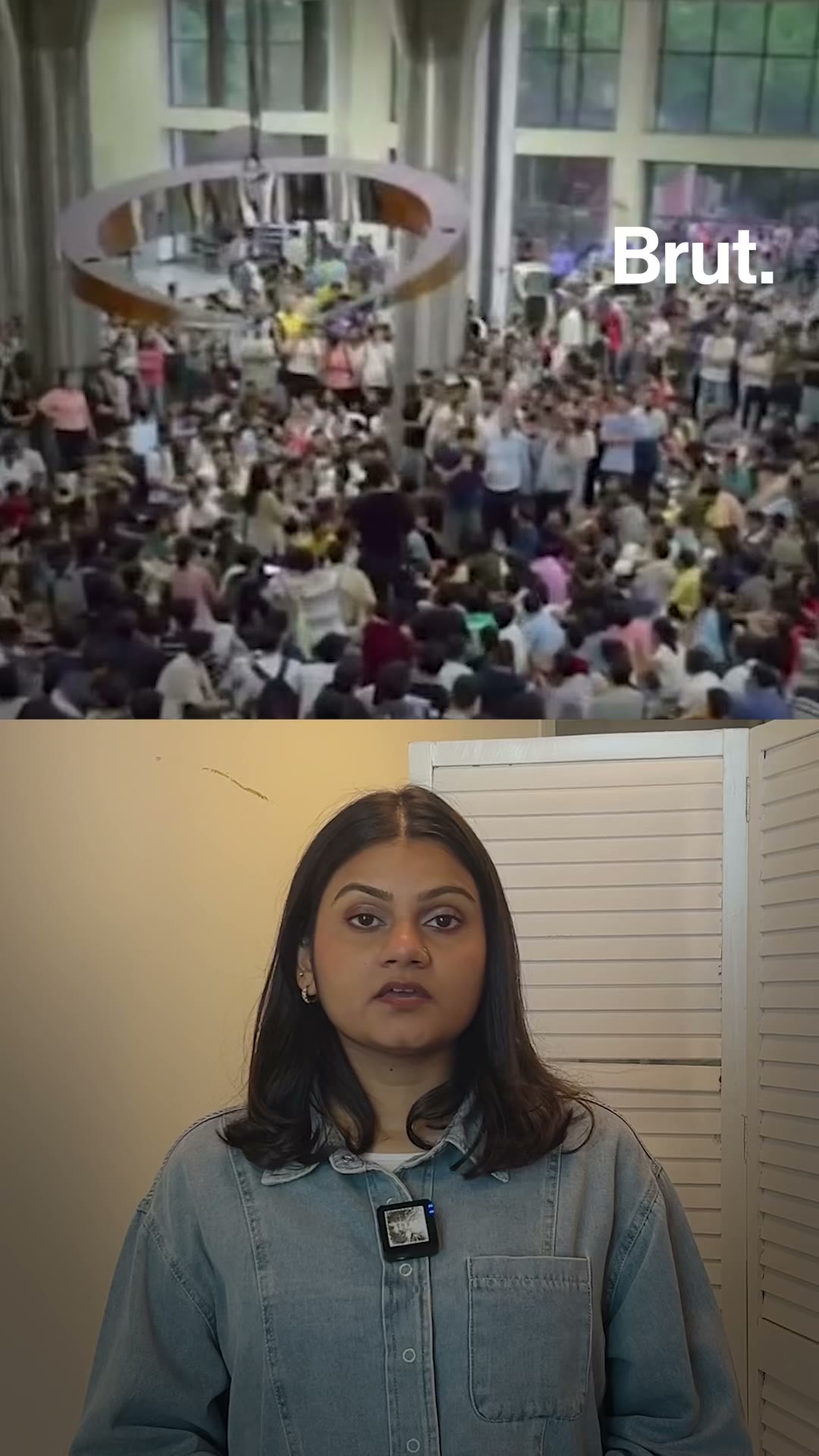
“We stayed in the basement for nearly two weeks, and barely moved out.”
That is how one Indian student described life inside Iran after the conflict that began on 28 February disrupted normal life in parts of the country.
For days, stepping outside felt risky.
Now, after a long and uncertain journey across countries, many of these students are back in India.
On 17 March, a second group of stranded Indians landed in New Delhi.
First, It Was Just Waiting
Before the journey out, there was a stretch of waiting.
“We were in complete lockdown and constantly lived in the fear that the next bomb could be dropped on our hostel,” 23-year-old Labeeb Qadri told Hindustan Times after returning to India along with dozens of other students.
Classes stopped
Airspace closed
Movement became limited
For many, the days blurred into each other inside hostels and basement shelters.
Also read: When Dubai Residents Opened Their Doors To Stranded Indians
Then Came The Journey Out
Leaving Iran did not happen in one step.
“We were stranded first in Iran then in Dubai,” Qadri told Hindustan Times.
The route looked like this:
Bus journeys from cities like Urmia and Tehran
Crossing the Iran–Armenia border
Flights from Yerevan
A stop in Dubai
Final arrival in Delhi
What is usually a direct journey became a multi-country evacuation.
Also read: How US–Iran Relations Shifted From Allies To Rivals
Even After Leaving, It Was Not Over
The journey did not immediately feel safe.
“Just when we were on the last leg of our journey in Dubai, there were reports of drone activity near the airport,” Qadri told Hindustan Times, recalling the uncertainty during transit.
Flights were delayed by nearly 12 hours
Dubai airport operations were temporarily suspended
Uncertainty continued even outside Iran
For some, the sense of being stranded did not end until they reached India.
What They Remember Most
For many, the experience was about staying safe, day by day.
“We only stepped out together when it was absolutely necessary to get essentials,” the 23-year-old told Hindustan Times, describing it as the most traumatic experience of their life.
Living in confined spaces
Planning basic movement carefully
Staying alert at all times
The routine was shaped by caution.
Why It Took Longer For Some
Not everyone could leave at the same time.
According to student accounts:
Peers from nearby countries exited earlier
Indian students depended on coordinated evacuation
Some groups remained until later stages
The Moment Of Arrival
For many, the journey ended in Delhi, but the feeling of being home took longer.
“Until I see my family in Kashmir, I won’t feel like I have returned home,” Qadri told Hindustan Times.
This was the second evacuation flight to reach India:
The first brought around 80 people
The second followed after delays
For families waiting at the airport, the moment was about finally seeing their children walk out safely.