



For 13 years, a 32-year-old man lived in a hospital bed after a devastating fall.
He had suffered severe brain damage and remained in a permanent vegetative state. Doctors kept him alive through clinically assisted nutrition and hydration.
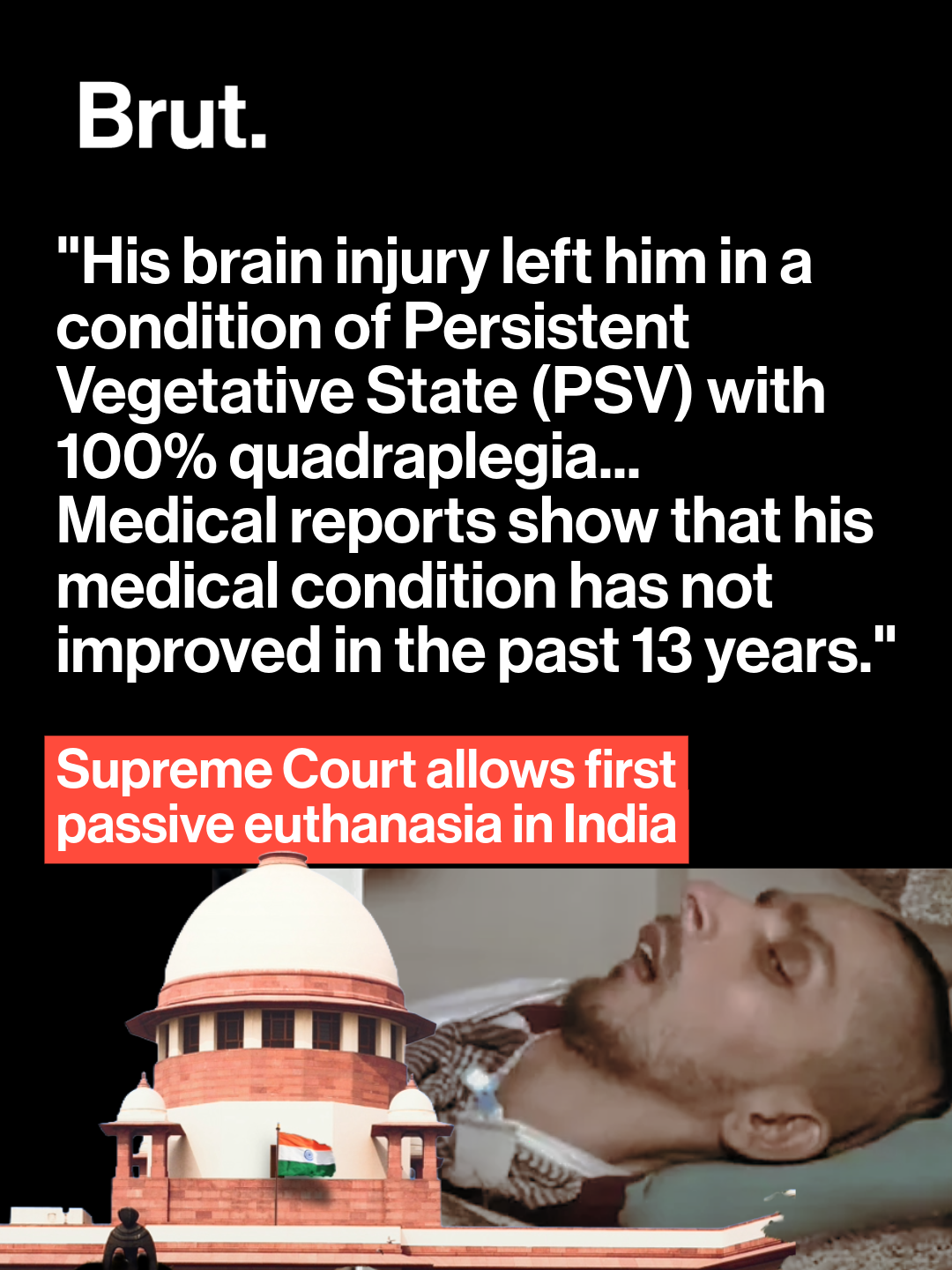
In 2026, the Supreme Court of India allowed his life support to be withdrawn after doctors confirmed there was almost no chance of recovery and his parents asked the court to end the treatment.
The case highlights a difficult question that families and courts sometimes face: When can life support be withdrawn?
The Case That Reached The Supreme Court
The man suffered a serious brain injury after falling from a building 13 years ago.
He never regained consciousness.
Doctors diagnosed him with a permanent vegetative state, a condition where the body remains alive but the brain shows no signs of awareness.
His father approached the courts seeking permission to withdraw the medical support keeping him alive.
A Long Legal Journey
The family first approached the Delhi High Court in 2024.
They requested permission for passive euthanasia, which allows doctors to withdraw life-sustaining treatment in certain situations.
The High Court rejected the request because the patient was not considered terminally ill.
The case later reached the Supreme Court of India.
At first, the court directed the Uttar Pradesh government to bear the treatment costs but did not allow withdrawal of life support.
In 2025, the father filed another application, saying his son’s condition had worsened and there was still no hope of recovery.
What Doctors Found
The Supreme Court asked doctors to re-evaluate the patient.
A Primary Medical Board examined him and reported that the chances of recovery were negligible.
A Secondary Medical Board from the All India Institute of Medical Sciences (AIIMS) reviewed the case and confirmed the same findings.
Both boards concluded that continuing clinically assisted nutrition and hydration was not in the patient’s best interest.
What The Supreme Court Decided
A bench of Justices J. B. Pardiwala and K. V. Viswanathan reviewed the reports and met the parents.
The court then allowed the withdrawal of life support.
Justice Pardiwala described the medical findings as a “sad report”, noting that the patient could not be made to continue living in such a condition.
The Family’s Difficult Decision
After the ruling, Harish Rana’s father said the decision had been deeply painful for the family.
For years, their lives had revolved around caring for their son in a single room of their home.
Thanking the court, he said the family had struggled with the decision but felt there was no hope left.
"For Harish and for us, this is a difficult decision, but it's in our interest. Watching your own child fade away is the deepest pain a parent can suffer. Yet, for him, death is a release, a gentle escape from the endless misery and suffering he has endured for the last 13 years. The house will feel empty, so will my heart… it will feel empty without my son."

What Is Passive Euthanasia?
Passive euthanasia refers to withdrawing or withholding life-sustaining treatment when recovery is no longer possible.
This can include stopping ventilators, feeding tubes, or other medical support.
In such cases, doctors allow the natural process of death to occur rather than actively causing it.
When Did India Allow This?
India formally allowed passive euthanasia in 2018, when the Supreme Court delivered a landmark judgment in the Common Cause case.
The court ruled that the right to die with dignity is part of the right to life under Article 21 of the Constitution.
The judgment also allowed people to create a living will, a document that states their wishes about medical treatment if they become unable to communicate.
Courts usually require medical board evaluations and family consent before approving withdrawal of life support.
ALSO WATCH: The Euthanasia Hungry Couple From Mumbai
What Other Countries Allow
Different countries follow different rules on euthanasia and end-of-life decisions.
Passive euthanasia is legal in several countries, including:
• United Kingdom
• United States
• Canada
• Australia
In these countries, doctors may withdraw life support when patients have no realistic chance of recovery and legal procedures are followed.
Some countries go further.
Active euthanasia, where doctors actively administer medication to end life, is legal in places such as:
• Netherlands
• Belgium
• Luxembourg
In Canada, Switzerland, and parts of the United States, assisted dying laws allow doctors to help patients end their lives under strict conditions.
ALSO WATCH: Things To Do When Hospital Denies Treatment
Why Courts Treat These Cases Carefully
End-of-life decisions involve legal, medical, and ethical questions.
Courts often rely on medical experts to confirm whether recovery is possible.
They also speak with family members to understand what the patient might have wanted.
Because of these safeguards, each case usually takes months or years to resolve.
