



What started as criticism of a few scenes in Peddi quickly became a much bigger conversation.
Soon after the film's release, viewers criticised the portrayal of Janhvi Kapoor's character, Achiyamma, arguing that she existed mainly as a romantic interest rather than a fully developed character. Several scenes and camera angles were called out online for objectifying the character.
As the backlash intensified, director Buchi Babu Sana apologised and announced changes to portions of the film.
But the controversy did not stop at Peddi.
Instead, it reopened a question that has followed Indian cinema for decades: why are women so often treated as objects of desire rather than characters with agency?
Objectification Of Women In Indian Cinema: A Long Pattern Beyond Peddi
The debate around objectification did not begin with Janhvi Kapoor or Peddi.
For decades, Indian cinema has worked through what film scholars call the "male gaze", where women are framed mainly through appearance rather than agency.
This is most visible in songs.
From cabaret performances by Helen in the 1960s and 1970s to later item numbers, glamour became a commercial device.
Songs such as Munni Badnaam Hui, Sheila Ki Jawani, Chikni Chameli and Fevicol Se turned female presence into spectacle and sparked debate.
In mainstream films, narratives have long been hero-driven.
Women are often placed in roles tied to romance, glamour or emotional support instead of independent arcs.
A study published in the National Library of Medicine notes that repeated portrayals of women as passive or decorative can shape social understanding of gender beyond cinema.
This approach has also been reinforced by commercial logic.
Glamour and sexualised presentation have often been treated as box-office drivers.
Actor Nithya Menen has described objectification as an industry-wide issue driven in part by commercial pressures.
Critics point to a deeper gap.
Women are frequently written without agency and used to support the hero's story.
Much of the criticism surrounding Peddi focused on Achiyamma's characterisation rather than on Janhvi Kapoor herself.
ALSO READ: From Don 3 Ban Row To Nude Shoot: 5 Times Ranveer Singh Hit Headlines For The Wrong Reasons
The Audience Is Changing The Script
Indian cinema today looks very different from what it did twenty years ago.
Female-led stories have become more common, and audiences are increasingly willing to support them.
Films such as Queen, Raazi, Thappad, Gangubai Kathiawadi and The Great Indian Kitchen placed women at the centre of the narrative rather than on the sidelines.
Streaming platforms have also expanded the kinds of stories being told.
At the same time, social media has made audiences more vocal than ever before.
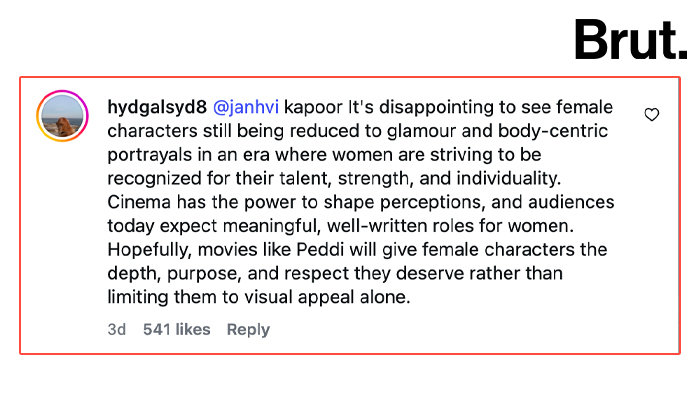
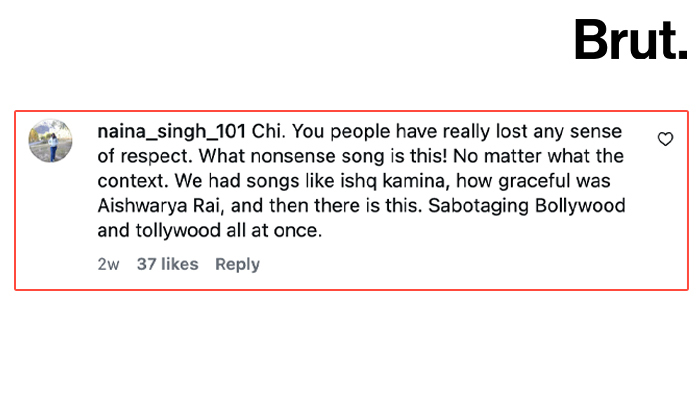
The response to Peddi shows how quickly public criticism can influence the conversation around a film. Within days of the backlash, director Buchi Babu Sana announced revisions to parts of the film.
ALSO READ: Yami Gautam: How Discipline, Controversy and Choice Shaped Her Career
The Actors Who Refused To Stay Silent
The debate has also highlighted a growing expectation that actors should speak up when they feel uncomfortable with a role.
Veteran actor Jaya Bachchan recently recalled opposing an attempt to oversexualise a scene during her career. Her comments reignited discussions about whether performers should challenge problematic portrayals on set.
.jpeg)
Nithya Menen has repeatedly said that actors can draw boundaries and reject roles that do not align with their values.
Meanwhile, Kangana Ranaut argued that performers should not remain silent if they feel objectified. According to her, actors have a responsibility to question such portrayals.
Their comments reflect a broader shift in the industry, where performers are increasingly expected to engage with how women are represented on screen.
What Has Janhvi Kapoor Said?
Janhvi Kapoor has not made a detailed public statement on the controversy.
Director Buchi Babu Sana responded instead, apologised, and said parts of Peddi will be changed.
The debate has now moved beyond one film and into a wider conversation about how women are represented in Indian cinema.
ALSO WATCH: Equality should be personal for everyone: Janhvi Kapoor at Cannes 2025
ALSO WATCH: We’re too hard on our parents: Janhvi Kapoor
ALSO WATCH: Janhvi Kapoor opened up about her confidence issues, insecurities and more. @beerbiceps
